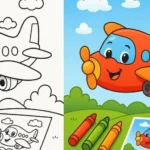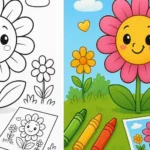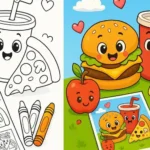

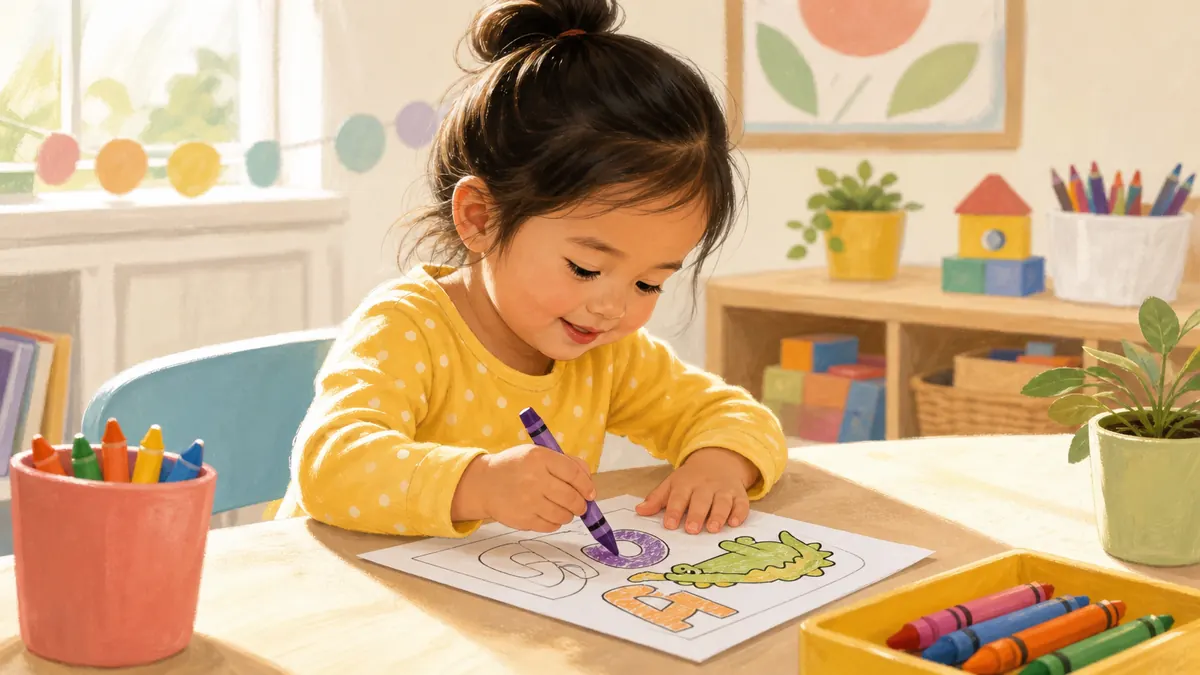

Coloring activities for preschool and early learning deliver genuine academic value in a format that 3–5-year-olds find inherently motivating — no coaxing required. Alphabet pages introduce letter-sound relationships while building the fine motor skills that writing readiness demands. Number pages make counting tangible. Science pages make the natural world visible and engageable. When chosen intentionally and paired with simple adult narration, preschool coloring activities are one of the highest-leverage early learning tools available.
What Makes a Coloring Activity Right for Preschool
Preschool coloring activities work best when they meet four criteria simultaneously:
- Achievable fine motor demand: Pages with bold, clear outlines and areas large enough for an imprecise 3–5-year-old grip to fill successfully
- Immediate recognizability: The subject of the page should be instantly identifiable — a simple apple, a large letter A, a bold number 3 — not requiring interpretation before engaging
- Educational content that’s incidental, not pressured: The best preschool coloring activities teach through the page itself rather than through drilling — a child coloring the letter A page is absorbing the letter even if no one explicitly teaches it
- Choice: Preschoolers who select their own page from 3–5 options engage significantly more deeply than those handed a page without input
Preschool Coloring Activities by Learning Domain
Early Literacy: Alphabet Coloring
Alphabet coloring pages are the single most evidence-supported early literacy coloring activity. Each page pairs a letter with a picture cue that reinforces the letter-name-sound-picture connection foundational to phonics. A preschooler who colors the letter B page — with a large bold B and a butterfly picture cue — is absorbing the association between the letter shape, its name, its sound, and a concrete visual referent.
The before-during-after sequence for maximum literacy impact:
- Before: Say the letter name, sound, and picture cue: “This is the letter B. B says /b/ like butterfly.”
- During: Have the child trace the letter with their finger before coloring. Narrate naturally: “Where is the butterfly? What color is it going to be?”
- After: Ask the child to find the letter somewhere in the room — on a book, a cereal box, a sign.
Browse our alphabet coloring pages — one page per letter with picture cues, available individually to follow any phonics sequence. For a structured approach, see our guide to how to teach letters with coloring pages.
Early Math: Number Coloring
Number coloring pages make numerals visual and tactile in ways that number cards and worksheets rarely achieve. The most effective preschool math coloring activities connect the numeral symbol to a corresponding quantity of objects: the number 4 page with four stars to count and color creates the numeral-quantity connection that is the foundation of number sense.
Browse our math coloring pages for number recognition and counting activities at the preschool level. For structured number learning approaches, see our guide to how to teach numbers with coloring pages.
Science Vocabulary: Nature and Animal Pages
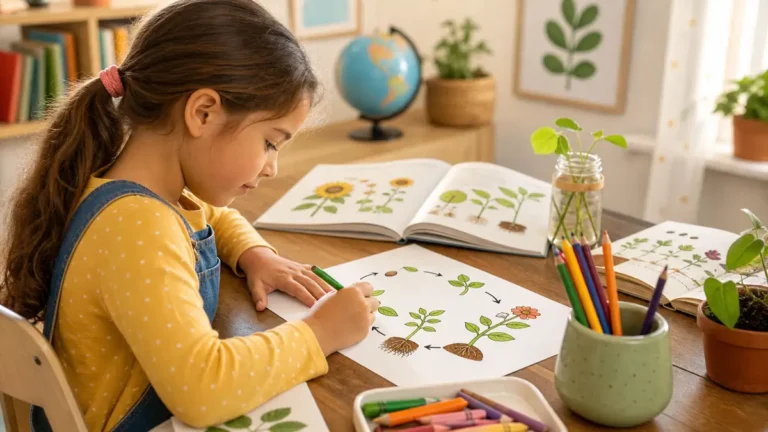
Preschoolers absorb science vocabulary rapidly through repeated exposure to named, pictured content. A child who has colored pages featuring a caterpillar, a chrysalis, a butterfly, a frog, and a tadpole has encountered these words and their visual referents multiple times in a pleasant, low-pressure context — which is exactly the kind of exposure that produces durable vocabulary learning.
Our animal coloring pages and nature pages provide the widest vocabulary exposure for preschool science. Simple life cycle pages — our life cycle coloring pages — introduce the foundational biology sequences appropriate at this level.
Fine Motor Development
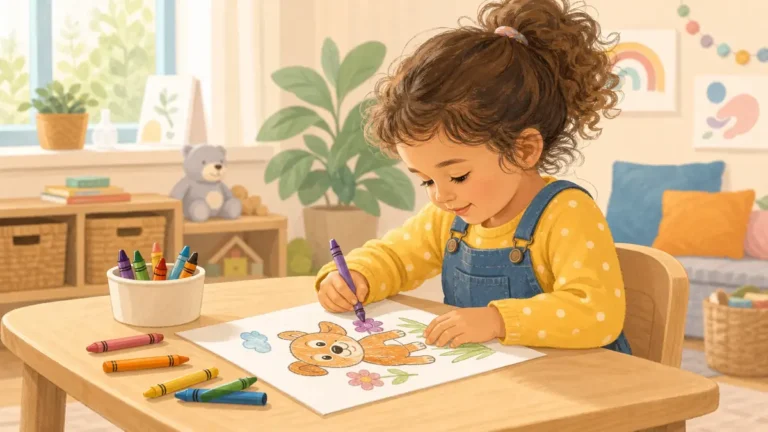
Every coloring activity at the preschool level is simultaneously a fine motor development activity — because every coloring activity develops grip strength, pressure control, stroke direction, and hand-eye coordination that are the direct prerequisites for handwriting. A preschooler who colors for 20 minutes is doing the fine motor work that writing readiness requires without any of the frustration that premature writing practice often produces.
For a detailed look at the fine motor development happening during preschool coloring, see our guide to how coloring builds fine motor skills.
Preschool Coloring in Different Settings
At Home
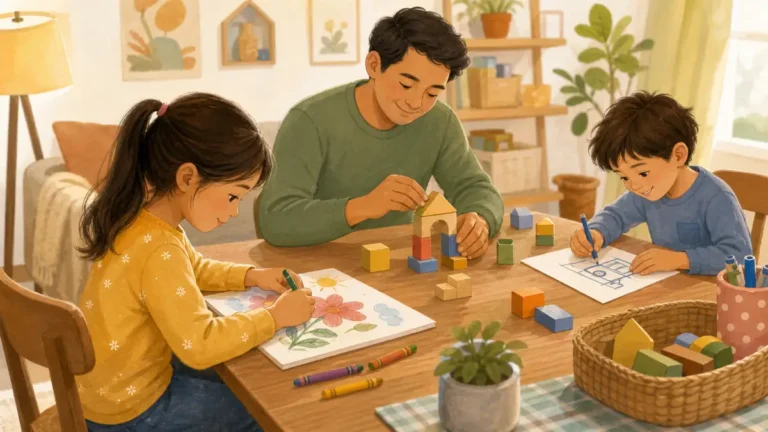
The most effective home preschool coloring routine is simple: 3–5 page options available at a consistent coloring table, parent present but not directing, light conversation about what’s being colored. The educational value comes primarily from the parent narration and questioning — “What letter is that? What sound does it make? How many stars are there?” — not from the page itself in isolation.
In Preschool and Pre-K Classrooms
Classroom preschool coloring works best as a small-group or center activity rather than whole-group — the individual pacing of coloring suits a center model well, and small groups allow the teacher to circulate with the before-during-after instructional prompts that amplify educational value. Alphabet and number pages directly connected to the week’s learning theme produce the strongest curriculum reinforcement.
In Homeschool
Homeschool preschool coloring is uniquely flexible — a page can follow live observation (color the bird you just saw outside), connect to the current read-aloud (color a page from the animal in today’s book), or serve as a morning basket enrichment activity while a parent reads aloud. See our homeschool guide for structured approaches: homeschool coloring pages and printables.
Frequently Asked Questions
What coloring activities are most educational for preschoolers?
Alphabet pages (letter-sound-picture connection), number pages (numeral-quantity connection), and simple science and nature pages (vocabulary exposure) deliver the highest academic value for preschoolers. The educational benefit is maximized when an adult uses the before-during-after instructional sequence: introduce the content before coloring, narrate and question during coloring, apply or find the content after coloring.
How long should a preschool coloring session last?
Most preschoolers (ages 3–5) can sustain focused coloring for 10–20 minutes per page they chose themselves. Having 3–4 pages available and allowing free switching maintains total engagement for 30–45 minutes for many children. Forcing completion of a page a child wants to abandon produces resistance; allowing natural switching maintains the positive association with coloring that makes it a sustainable daily activity.
Should I correct my preschooler’s coloring?
No — preschool coloring development follows a natural progression from scribbling across sections to increasingly intentional within-outline work. Correcting coloring that doesn’t stay within lines produces self-consciousness that reduces engagement and creative risk-taking. The only appropriate response to preschool coloring is enthusiastic positive attention to the work: “I love the colors you chose. Tell me about this part.” The fine motor precision develops naturally through practice; it doesn’t require correction.
Preschool coloring activities are one of the highest-value, lowest-resistance early learning tools available — they develop literacy foundations, math concepts, science vocabulary, and fine motor skills simultaneously in a format children approach with enthusiasm rather than resistance. Browse our alphabet, math, animal, and easy pages at cutecoloring.org, and visit our Tips & Techniques hub for preschool-specific guides.