
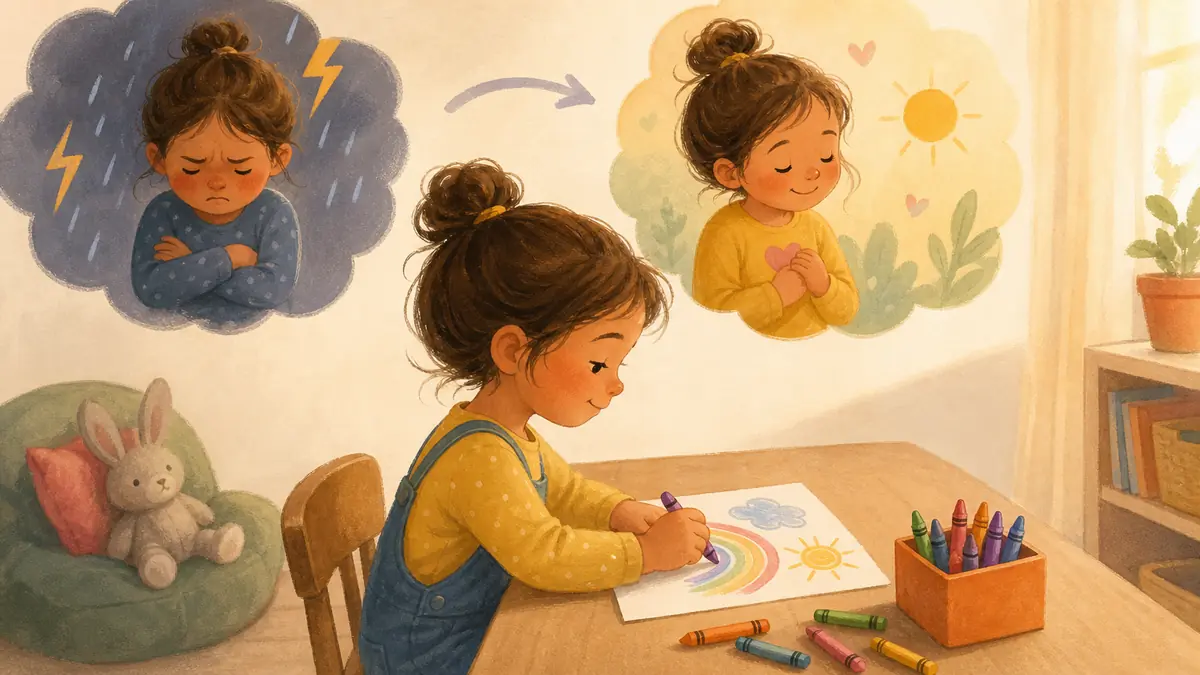

Coloring activities for big feelings give children a safe, non-verbal outlet for emotions they don’t yet have words for — anger, sadness, anxiety, and overwhelm can all be processed through the focused, repetitive motion of coloring in a way that words and conversation often can’t reach. When a child is flooded with emotion, giving them a coloring page and a quiet space does more than distract — it creates the physiological conditions for regulation to happen.
Why Coloring Helps Children Process Big Feelings
When children experience intense emotions, their prefrontal cortex — the thinking, reasoning, regulating part of the brain — goes temporarily offline. In this state, verbal processing (“let’s talk about your feelings”) is largely ineffective because the brain isn’t in a state where language and reasoning can operate normally. Children need a bottom-up regulation tool — something physical and sensory — to return the nervous system to a window of tolerance before reflection and conversation become possible.
Coloring works as a regulation tool because:
- The repetitive hand motion activates the parasympathetic nervous system (the “rest and digest” response)
- The visual focus of staying within outlines engages just enough of the brain’s attention to interrupt the rumination loop
- The pressure and grip of holding a crayon provides proprioceptive input that many dysregulated children find grounding
- The completion of a visible, tangible object creates a sense of accomplishment and control in a moment when things feel out of control
Coloring Activities for Specific Big Feelings
For Anger and Frustration
For angry children, the physical act of pressing a crayon hard and filling in a large bold area provides acceptable physical release. Our easy coloring pages with large spaces to fill work well here — the child can press firmly, fill aggressively, and experience the satisfaction of covering a whole space. Don’t redirect pressure toward gentle coloring; the pressure itself is part of what regulates.
For Anxiety and Worry
Anxious children benefit most from pages with repetitive patterns — mandalas, geometric designs, and scenes with many small similar elements. The repetitive motion becomes almost meditative. Our nature coloring pages — flowers with repeated petals, leaves with consistent vein patterns — are particularly effective for anxious children.
For Sadness and Grief
Sad children often want to be left alone but still benefit from gentle engagement. Place a coloring page and crayons quietly nearby without instruction. Choose pages that are neither too cheerful (which can feel invalidating) nor too somber — our animal pages with gentle, familiar subjects tend to be the right tone for sad children who need companionable quiet rather than enforced cheerfulness.
For Overwhelm and Overstimulation
Children who are sensory-overwhelmed need calm, simple, and predictable. A single bold outline page — one animal, one flower — with three or four crayons (not a full set) reduces decision-making demands to near zero. Our easy pages serve this purpose exactly.
Setting Up Coloring as a Big Feelings Tool
The Calm-Down Corner
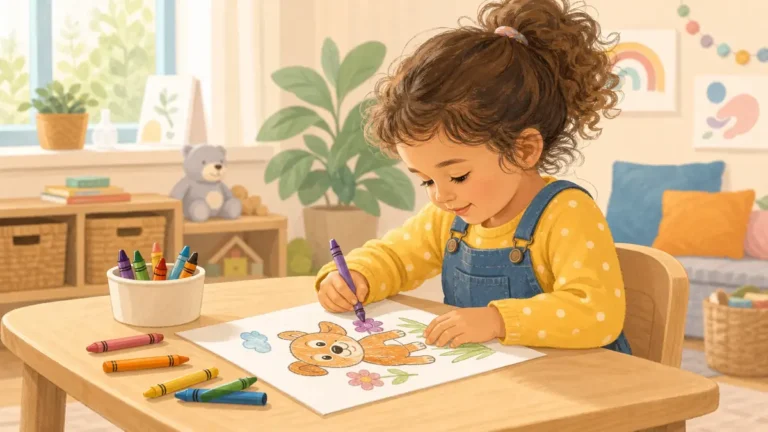
A designated calm-down space — even just a corner with a small table, a chair, and a box of supplies — gives children a physical location associated with regulation. Stock it with coloring pages (a small folder of 5–6 options), a cup of crayons, and optionally a sensory item (soft blanket, stress ball). When a child is dysregulated, they can be invited to the corner — never sent as punishment.
The Feelings Check-In
Before a difficult transition (ending screen time, leaving a fun activity), offer a coloring page as a bridge. “Before we stop, let’s take 10 minutes and color together.” This buffers the transition, gives the child a positive experience at the end of the current activity, and reduces the emotional charge of the change.
The Color-Your-Feelings Technique
Ask the child to choose a color that matches how they’re feeling and start with that color. As they work, ask: “What color is your feeling right now? Has it changed?” This builds emotional vocabulary and self-awareness while using the coloring page as a non-threatening medium for emotional expression. Many children will naturally narrate feelings they couldn’t access directly.
When Coloring Isn’t Enough
Coloring is a powerful self-regulation tool, but it’s not a substitute for professional support when big feelings are persistent, intense, or accompanied by concerning behaviors. Consult a pediatrician or child therapist if your child:
- Experiences intense emotional episodes regularly (daily or near-daily)
- Cannot be regulated by any self-soothing strategy including coloring
- Shows signs of clinical anxiety, depression, or trauma response
- Is harming themselves or others during emotional episodes
For more resources on supporting children’s emotional health through coloring and related activities, visit our Tips & Techniques hub.
Frequently Asked Questions
Can coloring really help kids with big emotions?
Yes — coloring is a recognized self-regulation tool used in art therapy, school counseling, and SEL programs specifically because it engages the body and the visual system in ways that calm the nervous system. It’s most effective as a bottom-up regulation strategy used before verbal processing — helping the child return to a regulated state where conversation and reflection become possible.
What coloring pages are best for children with anxiety?
Pages with repetitive patterns — mandalas, geometric designs, nature scenes with repeating elements (flowers, leaves) — are most effective for anxious children. The meditative repetition of coloring the same element over and over is particularly calming. Avoid pages with high-stimulation subjects or complex scenes with many competing elements.
How do I introduce coloring as a calm-down tool without forcing it?
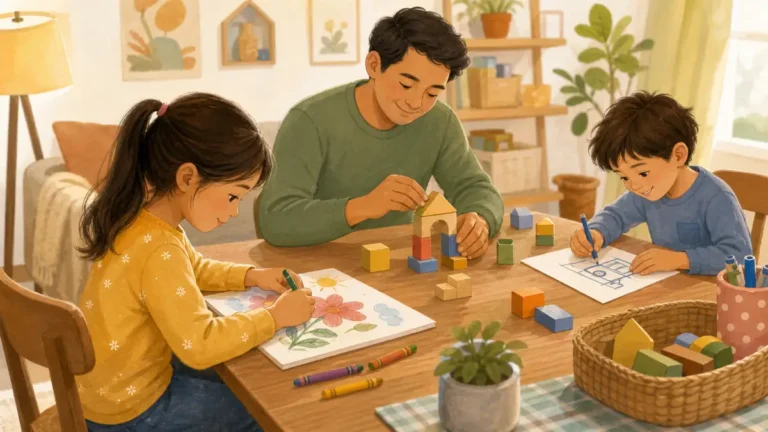
Introduce coloring as a calm-down tool during calm moments, not during crises. Color alongside your child during low-stress times and model using it for your own need to decompress (“I’ve had a busy day — I’m going to color for a few minutes”). When an emotional moment comes, offer it as an option: “Your coloring pages are right here when you’re ready.” Autonomy is essential — forced compliance defeats the regulatory purpose.
At what age can children use coloring for emotional regulation?
The physical calming effects of coloring are present from toddlerhood (18 months+). The intentional use of coloring as a self-regulation strategy — consciously reaching for it when dysregulated — typically develops between ages 4–6, with adult modeling and explicit naming of the tool. Children as young as 3 can learn to associate the coloring corner with feelings of calm.
Should I talk to my child about their feelings while they color?
During the coloring session, keep conversation minimal and non-directive — the regulation is happening in the body, and too much verbal input interrupts it. After 10–15 minutes of coloring, when the child has visibly regulated (slower breathing, relaxed posture, engaged with the page), a gentle check-in becomes possible: “How are you feeling now? Want to tell me about what happened?” The coloring creates the conditions; the conversation happens after.
Big feelings don’t have to mean big chaos. A coloring page, a quiet corner, and the time to let the crayon do its work gives children — and the adults who love them — a reliable, gentle path back to calm. Browse our nature, flowers, animals, and easy pages to build your calm-down coloring library.