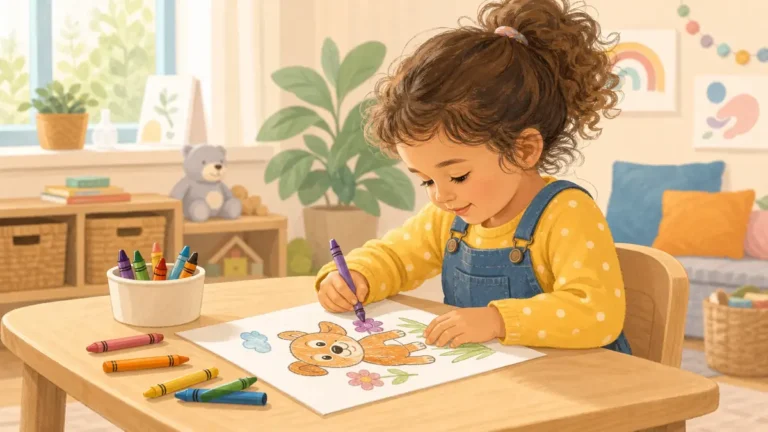

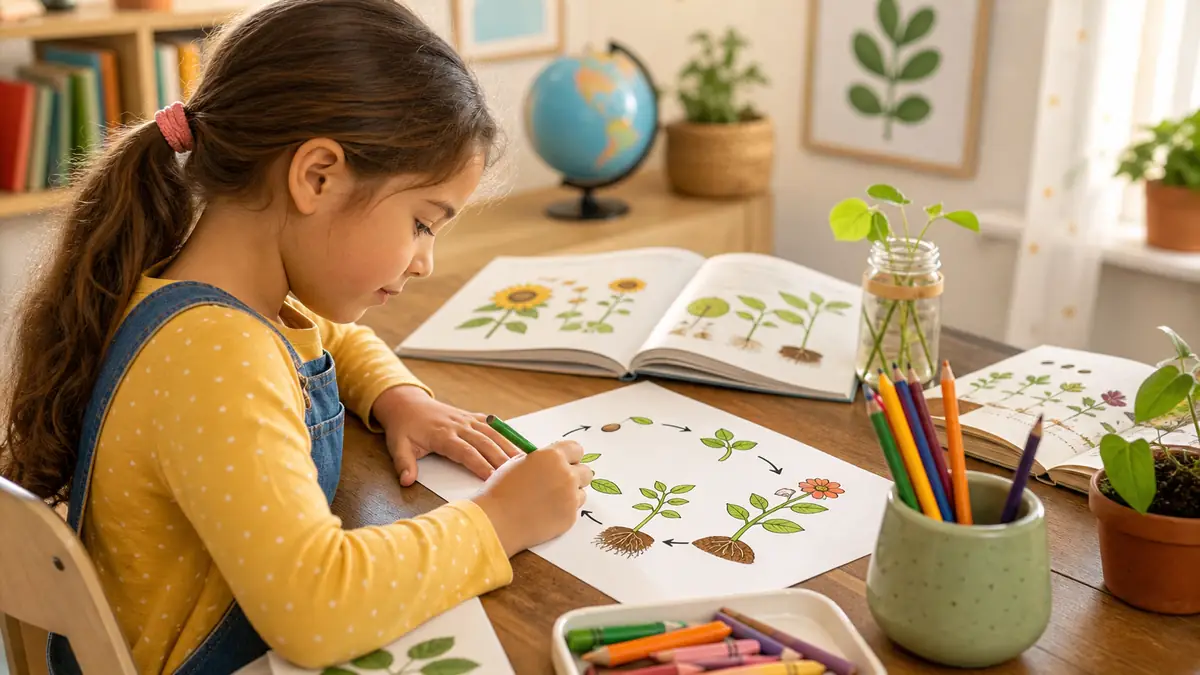

Science coloring pages give kids a hands-on way to engage with scientific content that is otherwise invisible, abstract, or impossible to observe directly — the stages of a butterfly’s metamorphosis, the layers of the Earth, the parts of a plant cell. When a child colors and labels a diagram, they’re building visual-spatial knowledge of that concept that reading alone rarely produces. This guide covers the science topics best suited to coloring page learning and how to use them for maximum educational impact.
Why Science and Coloring Are a Natural Pairing
Scientific content is disproportionately visual — biologists, geologists, astronomers, and ecologists all rely on diagrams, illustrations, and visual models to communicate processes that can’t be seen directly. The life cycle of a frog, the layers of a leaf, the structure of the water cycle — these are all inherently diagram-dependent concepts. A child who encounters these concepts through labeled coloring pages is engaging with them in the same visual format that scientists use, while simultaneously building fine motor skills and sustaining focused attention.
The kinesthetic dimension amplifies this further. A child who physically colors each stage of the butterfly life cycle — egg, larva, pupa, adult — and labels them creates a motor memory of the sequence that passive reading or watching cannot match. The finished page becomes a reference artifact they can return to weeks later.
Science Coloring by Topic
Life Cycles
Life cycle coloring pages are the highest-use science coloring category at the elementary level — and for good reason. Life cycles are inherently sequential, diagram-dependent, and among the most-tested elementary science concepts. The most commonly studied:
- Butterfly life cycle: Egg → caterpillar → chrysalis → butterfly — four distinct stages each visually distinctive and colorable
- Frog life cycle: Egg → tadpole → froglet → adult frog — shows transformation from aquatic to terrestrial
- Plant life cycle: Seed → sprout → seedling → mature plant → flower → fruit/seed — connects to garden observation
- Chicken life cycle: Egg → chick → juvenile → adult — the most accessible life cycle for very young children
Browse our complete life cycle coloring pages for all major elementary science species.
Best use protocol for life cycle pages:
- Color each stage a different color to visually distinguish the sequence
- Label each stage (parent writes labels for pre-writers; child writes independently for ages 6+)
- Number the stages in order after coloring
- Narrate: “Tell me what happens at each step” — oral narration tests whether the sequence is genuinely understood
Plant Biology
Plant anatomy pages — showing roots, stem, leaves, flower, and fruit with labeled sections — are among the most directly curriculum-connected science pages for grades K–3. Children who color and label plant anatomy pages before formal instruction begins arrive at the lesson with visual pre-knowledge that accelerates comprehension.
Connection to real-world observation: after coloring a plant anatomy page, take the child outside to find the same parts on a real plant. The bridge between diagram and observation is where the deepest science learning happens.
Animal Science
Animal classification, habitat, and adaptation pages connect the animals children are already fascinated with to formal science concepts. A child coloring an ocean animal page while learning about ocean habitat, or a desert animal page during a biomes unit, is building the visual vocabulary that anchors the unit’s content.
Our animal coloring pages cover a wide range of species across habitats — appropriate for elementary animal science study at every grade level.
Earth Science
Weather, seasons, rock types, landforms, and the water cycle are all highly diagram-dependent topics that benefit from coloring page engagement. A child who colors a water cycle diagram — evaporation, condensation, precipitation, collection — with each stage in a different color has a visual mental model of the process that lecture alone rarely produces.
Our science and nature coloring pages include Earth science content appropriate for elementary science study.
Human Biology
Simple human body system pages — skeletal, muscular, digestive, circulatory — are introduced in upper elementary science and benefit enormously from coloring page engagement. The complexity of human systems makes visual-kinesthetic learning particularly important; a student who has colored and labeled a heart diagram has a spatial understanding of cardiac structure that no amount of text reading reliably produces.
Using Science Coloring Pages in Context
As a Unit Opener
Presenting a coloring page of the unit’s central concept before instruction begins creates visual pre-exposure — the brain has a spatial framework into which subsequent verbal content fits. A butterfly life cycle page colored at the start of a metamorphosis unit produces stronger comprehension of the unit’s reading and discussion than the same page used afterward.
As a Lesson Consolidation
After instruction, a coloring and labeling activity consolidates the lesson through a different modality. Children who can correctly label a diagram from memory or guided reference have demonstrated understanding more concretely than a verbal question can assess.
Connected to Live Observation
The most powerful science coloring use is paired with live observation. Color the caterpillar page before looking for caterpillars outside; sketch the observed caterpillar after coloring the printed version; compare the diagram to the real organism. This observation-diagram-observation cycle is genuine scientific practice at the elementary level.
For STEM-integrated approaches, see our guide to STEM activities using coloring pages.
Frequently Asked Questions
What science topics have the best coloring pages for kids?
Life cycles (butterfly, frog, plant, chicken), plant anatomy, animal habitats and classification, and Earth science processes (water cycle, weather, seasons) are the most curriculum-aligned science coloring topics for elementary students. Life cycle pages deliver the greatest educational impact because the sequence encoding through coloring is uniquely durable compared to other learning formats.
At what age are science coloring pages most effective?
Ages 5–10 are the peak years for science coloring page value — children are developmentally ready for the fine motor demands of labeled diagram work and are in the critical window for science vocabulary and concept development. Younger children (3–5) benefit from simpler animal and nature pages without labeling; older children (10+) can handle complex multi-system diagrams with detailed labeling and written narration components.
Should children label science coloring pages?
Yes — labeling is what converts a coloring activity into genuine science learning. A child who colors and labels a butterfly life cycle diagram has encoded the stage names in both visual and motor memory, making later recall significantly stronger. For pre-writers, a parent can write labels while the child tells them what to write; from age 6–7, children can label independently with guidance.
Science coloring pages are among the most educationally powerful uses of coloring — they make abstract, invisible processes visible and engageable in a way that no other elementary activity matches. Browse our full science and nature and life cycle libraries at cutecoloring.org, and visit our Tips & Techniques hub for curriculum-connected science coloring guides.