

Teaching letters with coloring pages works because it combines the visual recognition of letter shapes with the kinesthetic experience of tracing and filling them in — creating a multi-sensory memory of each letter that purely visual flashcard methods can’t match. Children who color alphabet pages regularly show stronger letter recognition and faster writing readiness than those who practice letters only through writing drills.
Why Coloring Pages Work for Letter Learning
Letters are abstract symbols. For young children, making them concrete requires connecting the visual symbol (the letter shape) to something physical, meaningful, and memorable. Coloring alphabet pages does this in several ways at once:
- Visual recognition — children see the letter shape repeatedly while coloring it, building automatic recognition
- Motor memory — the hand follows the contours of the letter, building the muscle memory that will later produce the letter in writing
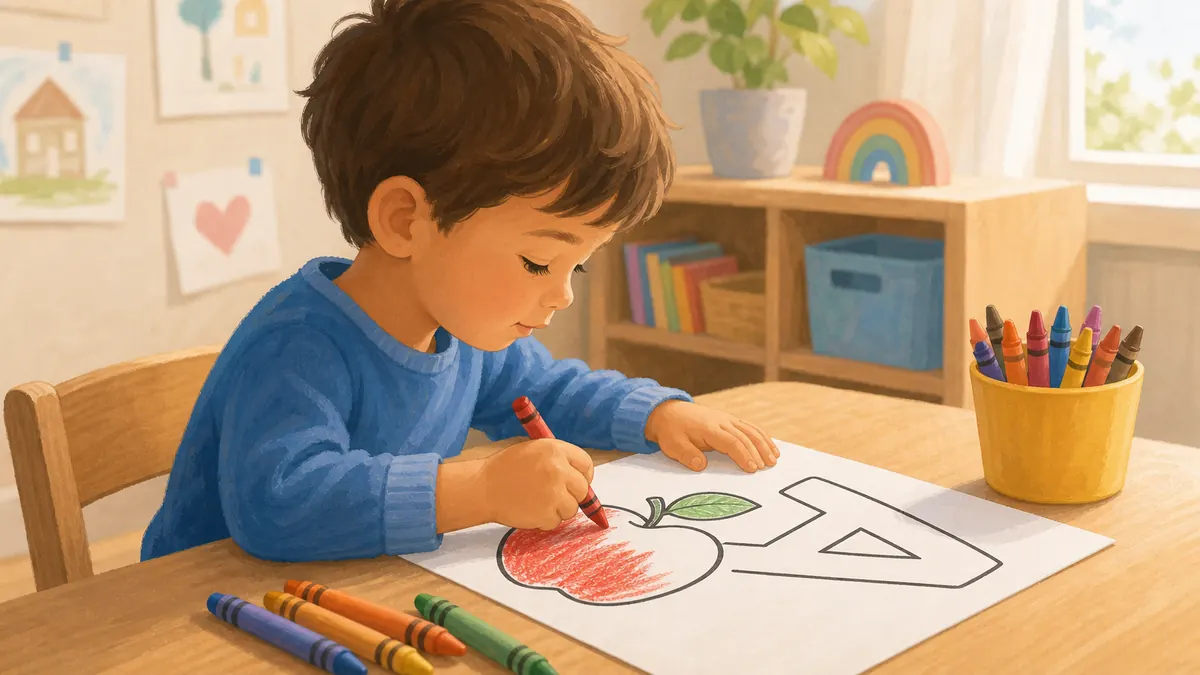
- Phonics connection — alphabet pages pair letters with picture cues (A for apple, B for ball) that anchor the letter-sound relationship in episodic memory
- Motivation — children color letters willingly and enthusiastically in a way they rarely approach writing drills
How to Teach Letters Using Coloring Pages: Step by Step
Step 1 — Introduce One Letter at a Time
Resist the urge to work through the alphabet in order if a letter isn’t clicking. Start with the letters in your child’s name — these are the most personally meaningful and the ones children are most motivated to learn. Print one alphabet coloring page per letter and work through at a pace that allows genuine mastery before moving on.
Our alphabet coloring pages include individual letter pages with picture cues — one page per letter, usable in any order.
Step 2 — Name and Sound Before Coloring
Before the child picks up a crayon, say the letter name and its primary sound together: “This is the letter B. B says /b/ like ball.” Point to the picture cue on the page and say it together. This phonics primer before the visual-motor coloring activity creates a complete sensory learning sequence.
Step 3 — Trace Before Coloring
Ask the child to trace the letter outline with their finger before picking up the crayon. This finger-tracing step encodes the letter’s shape kinesthetically — the same neural pathway that writing will later use — before any crayon touches paper. It takes five seconds and significantly improves letter shape retention.
Step 4 — Color the Letter and the Picture
Let the child color the letter and the picture cue in their own way. Don’t dictate colors — autonomy in creative choices increases engagement. As they color, narrate: “You’re coloring the letter B. What does B say? B says /b/ like ball — just like you’re coloring right now.”
Step 5 — Write the Letter Afterward
After coloring, ask the child to try writing the letter on the back of the page or on a separate piece of paper. The coloring activity has warmed up the grip and visual memory — this is the ideal moment to attempt the writing form of the letter. Keep the attempt brief and pressure-free: one or two letters, then celebration.
Alphabet Coloring Activities by Age
Ages 2–3 (Pre-Letter Stage)
At this age, the goal isn’t letter recognition — it’s exposure and familiarity with the concept of letters. Print large, bold individual letter pages and color them together. Name the letter and the picture cue while you work. The child isn’t expected to remember the letter independently yet; you’re building the background knowledge that formal learning will draw on later.
Ages 3–4 (Letter Awareness Stage)
Three and four-year-olds can begin to recognize letters, especially those in their own name. Focus on 5–6 personally meaningful letters (name letters, first letter of family members’ names). Use coloring pages for these priority letters repeatedly — the repetition of coloring the same letter page multiple times across weeks builds durable recognition.
Ages 4–5 (Letter Recognition and Beginning Phonics)
This is the core window for alphabet coloring as a learning tool. Children at this stage can work systematically through the alphabet, learning both letter names and primary sounds. Pair alphabet coloring with simple phonics games: “I spy something in this room that starts with the letter you just colored.”
Pairing Alphabet Coloring with Other Letter Activities
Coloring works best as part of a multi-sensory letter learning approach, not as the only method:
- Alphabet coloring + playdough letters — color the letter, then form it from playdough for a full kinesthetic experience
- Alphabet coloring + letter hunts — after coloring the letter B, hunt for B on a cereal box, a book cover, or a street sign
- Alphabet coloring + read-alouds — read a book that features the week’s letter (B is for Bear, etc.) alongside the coloring activity
- Alphabet coloring + sorting games — collect objects that start with the letter and photograph them beside the coloring page
For more on using coloring pages across the curriculum, visit our Tips & Techniques hub.
Frequently Asked Questions
Do alphabet coloring pages help kids learn to read?
Alphabet coloring pages support early literacy by building letter recognition and phonics awareness — two of the five foundational components of reading identified by reading researchers. They are most effective when paired with explicit phonics instruction (naming the letter sound) and applied across multiple contexts (coloring, writing, environmental print). They support the reading foundation; they don’t replace systematic phonics instruction.
What age is best for alphabet coloring pages?
Children as young as 2 can enjoy alphabet coloring pages as exposure activities. The most educationally productive age for alphabet coloring is 3–5, when children are in the letter recognition and early phonics window. Kindergarteners (5–6) benefit from alphabet coloring as a reinforcement and fine motor activity alongside formal reading instruction.
How many alphabet letters should I teach at once with coloring pages?
One to three letters per week is an effective pace for preschoolers. Teaching too many letters simultaneously dilutes attention and retention. Start with the letters in your child’s name, then branch out. Mastery of a small set of letters with strong recognition and phonics knowledge is far more valuable than partial familiarity with all 26.
Should kids color the whole alphabet page or just the letter?
Coloring both the letter and the picture cue is ideal — the picture cue is the phonics anchor that connects the symbol to the sound. Coloring both reinforces the full letter-name-sound-picture connection in a single activity. If the child wants to color only part of the page, that’s fine — the exposure to the letter happens regardless of completion.
How do I keep letter learning with coloring pages from feeling like a drill?
Follow the child’s lead on pace and enthusiasm. If a letter doesn’t interest them today, set it aside and come back. Vary the approach — sometimes trace with fingers, sometimes color, sometimes stamp or paint the letter page. Celebrate recognition (“You know that letter!”) without pressure to perform. Learning that feels like play is the most effective kind at this age.
Alphabet coloring pages are one of the simplest, most effective tools in an early literacy toolkit — low cost, high motivation, and genuinely multi-sensory. Browse our full alphabet coloring page collection to find the pages that match your child’s current learning stage.