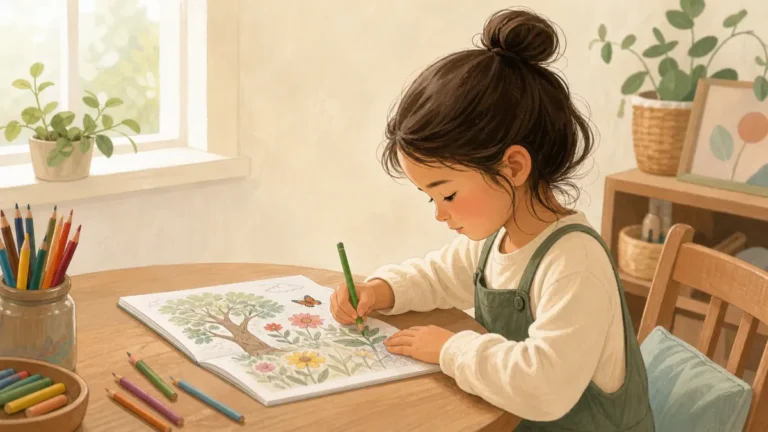

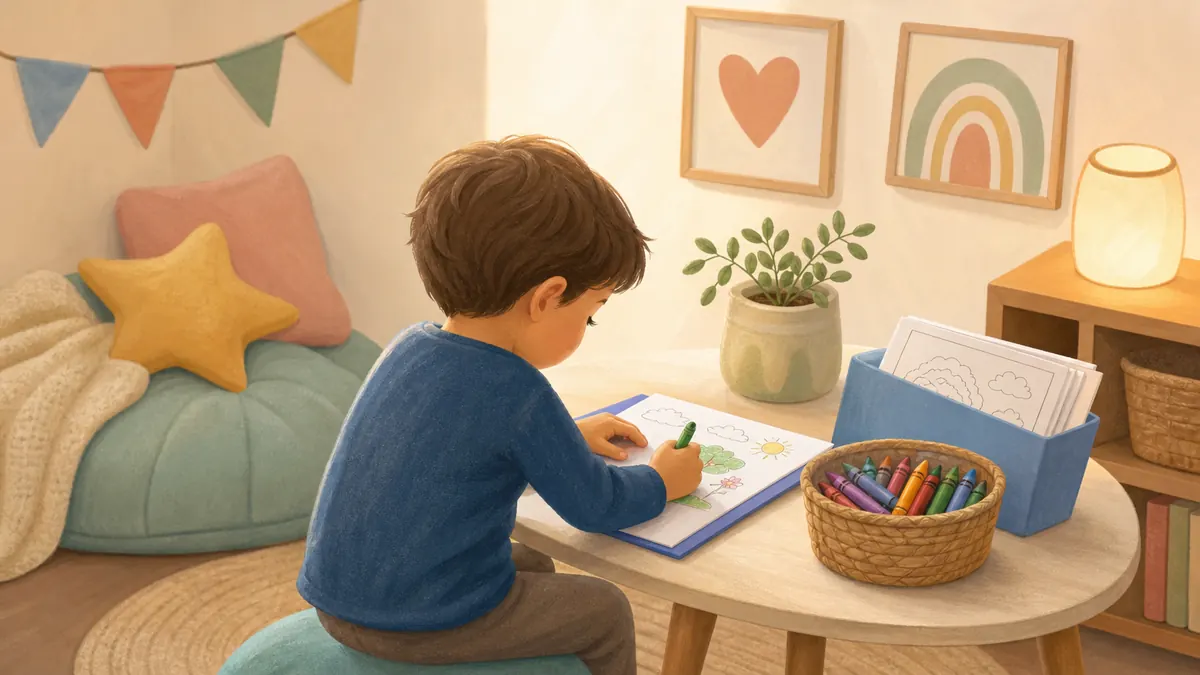

A calm-down corner with coloring pages gives children a designated physical space and a concrete calming activity — two of the most evidence-supported elements in pediatric emotional regulation intervention. When a child knows exactly where to go and exactly what to do when they feel overwhelmed, the arc from dysregulation to calm is dramatically shorter than when they’re expected to regulate in the open classroom or family living space with no clear guidance or tools. This guide covers how to build, stock, and introduce a calm-down corner that actually gets used.
Why a Designated Space Matters
The calm-down corner works for a non-obvious reason: it removes the social performance dimension of calming down. A child asked to calm down in the middle of the classroom or family room is expected to regulate under observation — which adds social stress to emotional stress, often making dysregulation worse. A designated corner that is physically separate from the main activity space gives the child privacy, reduced stimulation, and a clear signal that they are in a different mode. The physical space does regulatory work that adult instruction alone cannot.
The coloring pages are the anchor activity because they provide focused engagement without cognitive demand. A dysregulated child cannot do math or read; they can color. The attentional focus of coloring activates the prefrontal cortex and quiets the amygdala — the same neurological shift that occurs during meditation — in a format children can access without instruction or effort.
For the full neuroscience behind why coloring calms children, see our pillar guide on mindful coloring for kids.
Building the Physical Space
Location
The calm-down corner should be:
- Semi-private: Set apart from the main activity area — a corner, behind a bookshelf, in a closet alcove — where the child can’t be easily observed by others
- Low-stimulation: Away from screens, loud toys, and high-traffic zones that maintain or escalate activation
- Consistently available: Not a space that gets repurposed for other activities — the calm-down corner needs to always be “the calm-down corner” for the association to hold
- Comfortable: A cushion, small chair, or bean bag makes the space physically inviting rather than punitive
Size
Small is better — a 3×3 foot corner is ideal. The small scale creates a sense of enclosure that is inherently calming for many children (the same reason blanket forts are spontaneously self-regulatory). A large, open space doesn’t create the enclosed, safe feeling that a small corner provides.
Stocking the Calm-Down Corner
Coloring Pages
The coloring page selection for a calm-down corner should prioritize:
- The child’s current interests: A child who loves dinosaurs will calm more effectively with dinosaur pages than with pages that are theoretically calming. Our animal pages cover the most common child interest categories.
- Appropriate complexity for dysregulated states: Pages with bold, clear outlines and medium-size coloring areas — not so simple they’re boring, not so complex they add frustration. Our easy pages are appropriate for high-activation states.
- Nature and organic forms: Research consistently finds that nature scenes produce stronger calming effects than abstract patterns. Our nature pages and flowers and plants pages are the most frequently recommended for regulation use.
- A rotation schedule: Replace the available pages every 1–2 weeks — novelty maintains the corner’s appeal. A child who has colored the same five pages twenty times won’t reach for them during a difficult moment.
Coloring Tools
Keep it simple: a set of 12–16 washable crayons in an open container. Not a box that needs opening, not a large set that requires decision-making about color selection. A dysregulated child doesn’t need more choices — they need immediate access to something that works. Replenish broken or missing crayons immediately; gaps in the supply create friction at the point of need.
Other Optional Elements
The coloring supplies should be the primary activity tool. Additional elements that complement without overwhelming:
- A small sensory item (textured fabric, smooth stone) that provides tactile regulation support
- A simple feelings poster or feelings chart — not for instruction during dysregulation, but for reference during the recovery phase when the child can begin to name what they felt
- A sand timer (3–5 minutes) for children who find it helpful to know how long they’re spending in the corner
Introducing the Calm-Down Corner
The calm-down corner is most effective when introduced during calm times, not first encountered during a crisis. Walk the child through the space when everyone is regulated: “This is our calm-down corner. When you’re feeling really big feelings and need some quiet time, you can come here and color. Let’s try it now.” Practice visits during calm moments build the neural association between the space and regulation before an emotionally demanding situation activates it for the first time.
Language That Works
The framing of the calm-down corner determines whether children use it willingly or resist it. Avoid language that makes it feel punitive (“Go to the calm-down corner and think about what you did”). Prefer language that makes it feel supportive (“I can see you’re having some big feelings. Would you like to go to the calm-down corner and color for a bit?”). The goal is a child who chooses to go to the corner proactively because they associate it with relief — not a child who is sent there as a consequence.
Classroom vs. Home Calm-Down Corners
The setup principles are the same in both settings, but the implementation differs:
- Classroom: A calm-down corner needs a clear visual signal for students (and substitute teachers) indicating what it’s for. A laminated sign, a small poster, and a class-introduced routine (“When you need calm-down time, take a page from the folder and go to the corner”) make it self-managing. Class coloring page stock should include 8–10 pages and be restocked every 2 weeks.
- Home: The home version can be more personalized — the child can help choose the pages, the cushion, and any small sensory items. This ownership increases the likelihood of voluntary use during difficult moments.
For broader emotional regulation through coloring, see our guides to coloring activities for big feelings and relaxation techniques for kids using coloring pages.
Frequently Asked Questions
What should I put in a calm-down corner for young children?
For children ages 3–7: a comfortable cushion or bean bag, 5–8 coloring pages in the child’s current interest themes (rotated every 1–2 weeks), 12–16 washable crayons in an open container, and optionally one or two simple sensory items. Keep it simple — too many options create decision fatigue rather than calm. The coloring pages are the anchor activity; everything else is optional support.
How do I get my child to actually use the calm-down corner?
Introduce it during a calm moment, not a crisis. Practice using the corner together when everyone is regulated so the child has a positive association with the space before they need it. Offer it as a supportive option (“Would you like to go color?”) rather than directing them there as a consequence. Once a child has experienced the corner as genuinely helpful — especially if they return visibly calmer — they often begin using it proactively without prompting.
Can a calm-down corner coloring activity replace professional support for emotional regulation challenges?
No — a calm-down corner is a supportive environmental tool, not a clinical intervention. For children with significant emotional dysregulation, anxiety, trauma responses, or behavioral challenges that are significantly impacting daily functioning, professional assessment and support (pediatric therapist, school counselor, occupational therapist for sensory regulation) is appropriate alongside — not instead of — environmental supports like a calm-down corner.
A well-built calm-down corner with coloring pages is one of the most practical, evidence-aligned emotional regulation supports available to parents and teachers. Browse our nature, animal, and easy pages at cutecoloring.org to stock your corner, and visit our Tips & Techniques hub for more emotional regulation and mindfulness resources.